What’s Included in Our Paraglider Laser Trimming & Inspection Service
Our comprehensive inspection and laser trim service includes:
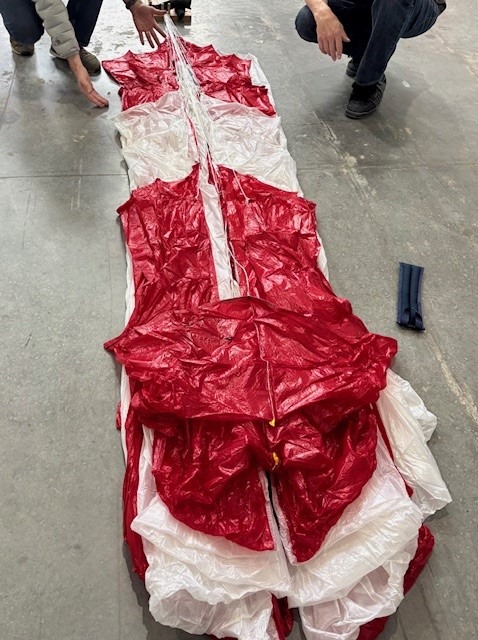
- Canopy Inspection & Cleaning: Hang and inspect the paraglider canopy for visible damage, and remove loose debris from inside the wing.
- Suspension Line Inspection: Perform a visual and tactile inspection of suspension lines for wear, damage, and deterioration.
- Fabric Strength Testing: Evaluate canopy fabric strength using a Bettsometer.
- Porosity Testing: Test canopy fabric porosity to assess air permeability.
- Precision Laser Line Measurement: Measure suspension line lengths and evaluate the wing’s trim against applicable manufacturer specifications.
- Trim Adjustments: Adjust riser line loops as appropriate to correct line trim.
- Brake Line Adjustments: Inspect and adjust main brake lines as needed.
- 2 -3 day turnaround to have the inspection completed.
Inspection & Laser Trim Pricing
$200 — Paragliders with Hard Links
$250 — Paragliders with Soft Links
Optional Add-On: $65 — Non-Destructive Line Strength Test
Non-destructive line strength testing can be added to the inspection service for an additional $65.
Please Note: Standard inspection and laser trimming do not include line strength testing or replacement suspension lines. These services are available separately or as indicated above.

Laser Measuring a paraglider
Pre-Sale & Annual Paraglider Inspections
Buying or selling a used paraglider? Know the condition of the wing before making a decision.
At 406 Paragliding, we offer a pre-sale inspection service designed to help buyers and sellers better understand the condition of a used paraglider.
Our inspection focuses on canopy fabric condition, suspension line strength, and identifying visible wear or damage that may require attention.
Pre-Sale / Annual Inspection — $150
This inspection includes:
- Fabric Strength Testing: Evaluate canopy fabric strength using a Bettsometer.
- Porosity Testing: Measure fabric air permeability.
- Non-Destructive Line Strength Testing: Assess selected suspension lines using our non-destructive testing procedure.
- Visual Inspection: Examine suspension lines, risers, and canopy for visible damage, wear, or repairs that may be needed.
- A report with the results of the inspection
Important: This service does not include laser trim measurements, trim adjustments, or replacement suspension lines. A complete laser trim inspection can be purchased separately.
A pre-sale inspection provides useful information about a wing’s condition but does not guarantee its future performance or airworthiness.
Non-Destructive Paraglider Line Strength Testing
Evaluate suspension line strength without automatically sacrificing a line for testing.
At 406 Paragliding, we use a non-destructive line testing procedure based on training and methods developed by the Association of Paragliding Pilots and Instructors (APPI).
Our testing equipment includes a calibrated digital force measurement system, a load cell, and a controlled actuator that applies and measures tension on selected suspension lines.
How Non-Destructive Line Testing Works
Suspension lines are subjected to a calculated test load based on the manufacturer’s specified line strength and the applicable testing protocol.
Unlike traditional destructive testing, which requires pulling a line until it breaks, non-destructive testing applies a controlled load without intentionally breaking the line.
The test helps identify lines that may have insufficient strength and require further evaluation or replacement.
Dyneema vs. Aramid Suspension Lines
Dyneema Lines: Dyneema generally offers good strength retention but can experience significant dimensional changes, including shrinkage, over time. Line condition, construction, and manufacturer guidance determine when strength testing is appropriate.
Aramid Lines: Aramid lines generally exhibit greater dimensional stability but may lose strength through aging, repeated bending, and other forms of deterioration. Periodic strength evaluation can be particularly important.
Important Testing Limitations
Non-destructive testing is performed on selected lines according to the applicable procedure. It does not guarantee the strength of every suspension line or establish that a paraglider is airworthy.
Any line that fails to meet the applicable test criteria requires further evaluation and may need replacement.

force meter
Non-Destructive Line Strength Testing — $100
- Includes testing up to 4 lines
- (does not include cost of replacing any bad lines)

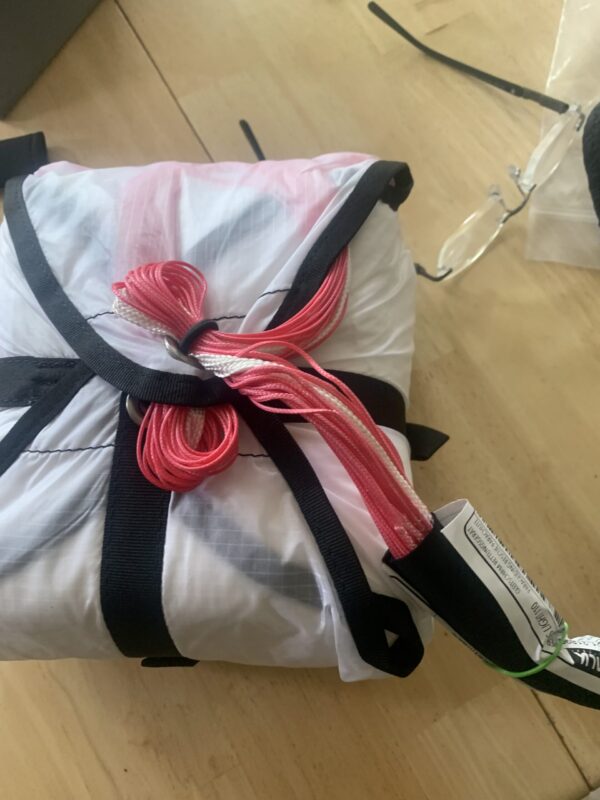
Replacement paraglider lines
Replacement Paraglider Lines & Installation
-
$45 — Lower suspension line, supplied and installed
-
$50 — Middle suspension line, supplied and installed
-
$55 — Upper suspension line, supplied and installed
- $35 — Replacement suspension line only (customer installation; shipping additional)
Replacement lines are manufactured to applicable specifications. Installed pricing includes one replacement line and installation. The $35 line-only option does not include installation or shipping. Additional repairs or adjustments may incur separate charges.
Need replacement suspension lines for your paraglider? Visit our Replacement Paraglider Lines page to request custom replacement lines manufactured to applicable specifications.
Paraglider Rigifoil & Support Rod Inspection
Modern paragliders often incorporate flexible support rods (commonly called Rigifoils) to maintain the designed shape of the canopy.
Some newer B- and C-class wings use longer support rods, including rods located near the upper-surface trailing edge.
Over time, changes in canopy fabric dimensions, rod deformation, or damage can affect how these rods fit within the wing. A rod that is too long, too short, or improperly positioned may distort the canopy or create unwanted fabric tension.
At 406 Paragliding, we inspect support rods for visible damage, improper fit, and excessive tension. When appropriate, we can evaluate potential adjustments or repairs in accordance with the manufacturer’s specifications.
Rigifoil / Support Rod Tension Inspection: $100
Inspection includes evaluation of support rod condition, positioning, fit, and tension. Any necessary repairs, rod replacement, or adjustments are quoted separately and performed in accordance with applicable manufacturer specifications.


Scott Wuebber –
Top notch maintenance work!